
STORIES · Southern Tidelands - Woodbine, Kingsland, St. Marys
When the Northeast Wind Takes Hold
An incoming nor'easter is expected to bring elevated tides, rough waterways, and changing fishing conditions to the Southern Tidelands during Thanksgiving week.
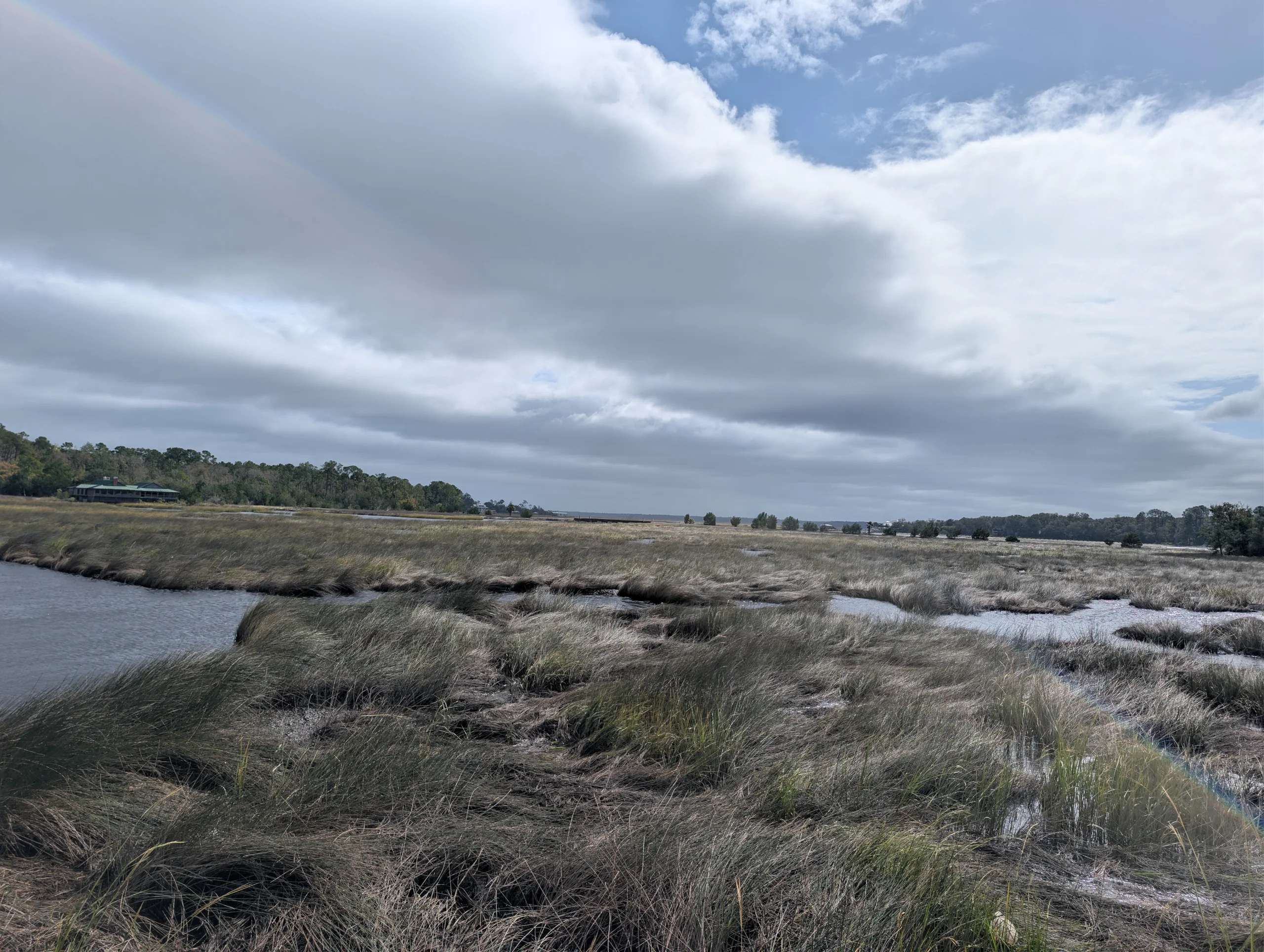
Along the southern Georgia coast, few weather patterns can transform our waterways quite like a sustained northeast wind.
After several days of rain recently quieted the marshes, another weather system is approaching, this time bringing strong onshore winds capable of changing the behavior of our tidal rivers and creeks.
The National Weather Service is forecasting a local nor'easter beginning Tuesday afternoon and continuing into Wednesday. Coastal wind gusts could reach 40 mph, with dangerous surf, rough marine conditions, and coastal flooding expected.
For those living along the water, and those hoping to spend part of Thanksgiving week fishing, the effects could linger well beyond the strongest winds.
When the Water Has Nowhere to Go
Under normal conditions, the marshes fill and empty with the familiar rhythm of the tides.
A persistent northeast wind can interrupt that rhythm by pushing Atlantic water toward the coastline and slowing its retreat.
Across the Satilla, Crooked, and St. Marys rivers, this can mean higher-than-predicted water levels, less pronounced low tides, and marshes that remain flooded longer than usual.
Even when the tide is scheduled to fall, wind-driven water may prevent the creeks from draining as they normally would.
The National Weather Service has issued a coastal flood warning for coastal Camden County from 1 a.m. until 7 p.m. Wednesday.
Waterfront residents may wish to secure boats, check dock lines, and move equipment away from low-lying areas before conditions deteriorate.
What It Means for Fishing
November can be a rewarding time to fish the Southern Tidelands, particularly for redfish and spotted seatrout. But this week's conditions may require anglers to rethink their familiar fishing spots.
Higher water can give redfish access to flooded marsh grasses, allowing them to spread across areas that are ordinarily inaccessible.
Meanwhile, strong winds can stir sediment, reduce water clarity, and alter the movement of baitfish and shrimp.
The freshwater runoff from recent rainfall adds another variable. Depending on the location, river flow, and strength of the incoming tides, salinity may continue to fluctuate as freshwater and saltwater mix throughout the estuaries.
For anglers, the combination of wind, water clarity, temperature, and changing salinity may prove more important than the tide chart alone.
Once conditions become safe, sheltered creeks, deeper bends, protected oyster beds, and areas where clearer water meets moving currents may offer promising places to explore.
Looking Toward Thanksgiving Weekend
The strongest effects of the nor'easter are expected Tuesday evening and Wednesday, with winds forecast to ease significantly by Thanksgiving Day.
Thursday should bring improving weather, followed by cooler temperatures Friday and through the weekend.
However, calmer skies do not necessarily mean the waterways have immediately returned to normal.
As the northeast winds relax, accumulated water may begin draining from the marshes more freely. That movement could redistribute baitfish and create different feeding opportunities for redfish and trout.
Behind the weather system, cooler temperatures may also encourage fish to congregate around deeper channels and protected structure.
Friday through the weekend could offer better opportunities for inshore fishing, provided marine conditions improve and local water levels, currents, and visibility are favorable.
Anglers should continue monitoring marine advisories before heading out, particularly near exposed sounds, inlets, and Cumberland Island.
A Living, Changing Coast
One of the remarkable things about living along the Southern Tidelands is that the landscape is never quite the same from one day to the next.
The moon and sun establish the rhythm of the tides, but the wind, rain, and rivers continually rewrite it.
This week's nor'easter is another reminder that the marshes are not simply scenery. They are part of a dynamic coastal system, responding to forces that reach far beyond our familiar waterways.
For a few days, the fishing rods may remain tucked away, the boats secured to their docks, and the marsh grasses submerged beneath unusually high water.
But when the winds finally settle, there will be a slightly different coast waiting to be explored.
Everywhere the tide reaches.
---
Weather resources: National Weather Service Jacksonville (weather.gov/jax), NOAA Tides and Currents (tidesandcurrents.noaa.gov), and Georgia Tidal's Coastal Conditions page.
Forecast information is based on the November 24 morning outlook and is subject to change.