
STORIES
When the Rain Settles Over the Tidelands
Several days of mild temperatures and steady rain have brought a quieter rhythm to coastal Georgia.
When the Rain Settles Over the Tidelands
Several days of mild temperatures and steady rain have brought a quieter rhythm to coastal Georgia.
There are days along the Southern Tidelands when the outdoors seems to invite you into every corner of it. Days made for fishing, boating, exploring the backwaters, or simply sitting beside the river and watching the wildlife come and go.
And then there are days like these.
For the past several days, rain has settled over coastal Georgia. It hasn't been particularly cold, but the persistent wet weather has been enough to put many outdoor adventures on hold.
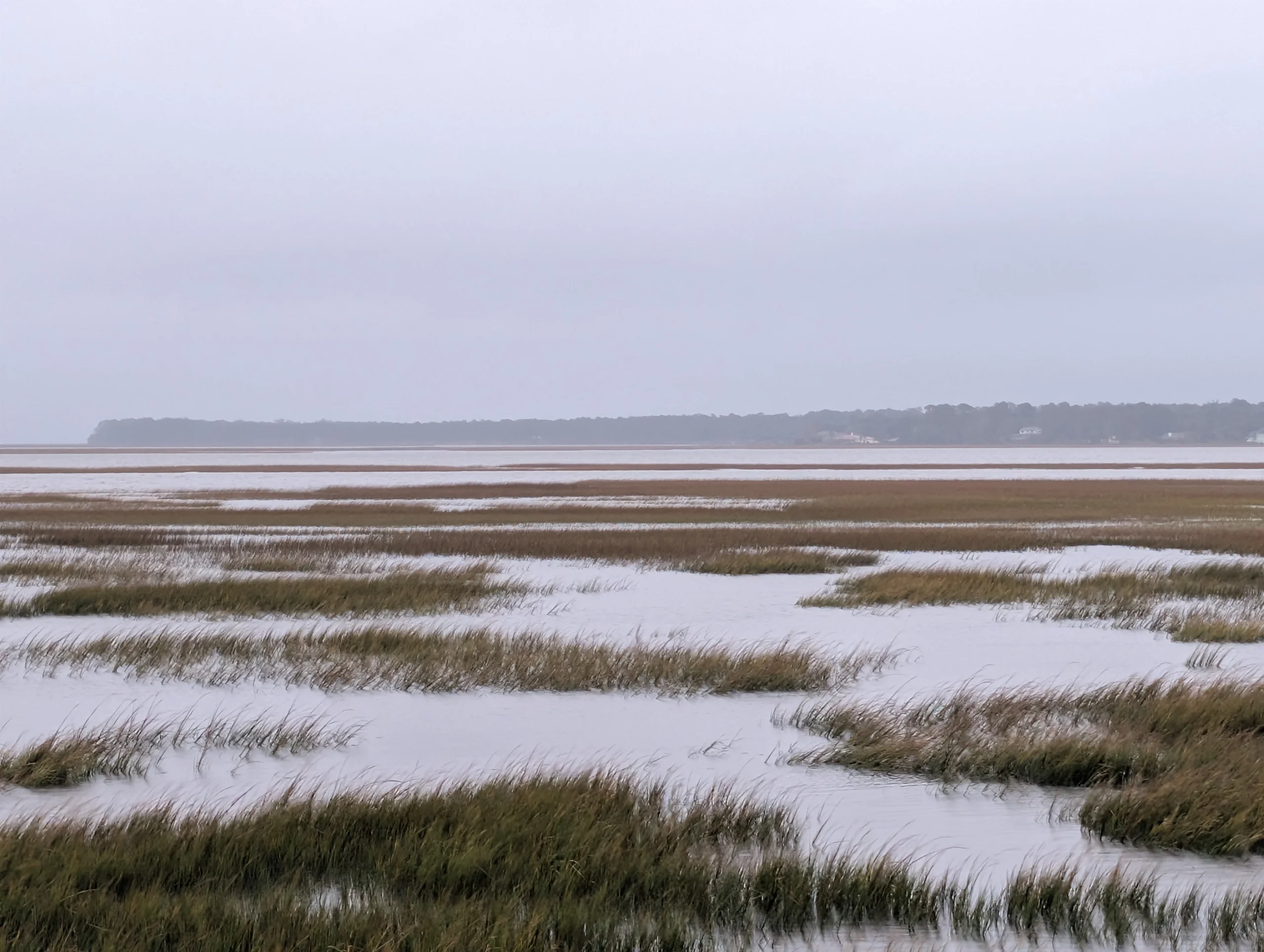
The marshes have taken on a muted appearance. Under a pale gray sky, the grasses bend over shallow ribbons of water, and the distant tree line seems to disappear into the haze. The colors are softer, the horizon less distinct, and the waterways quieter.
Even the birds that ordinarily gather on the pilings have been scarce.
It's a different kind of coastal beauty. Not the brilliant gold of a sunset across the marsh or the sparkling water of a clear afternoon, but something subdued and contemplative.
Rain Changes More Than the Scenery
Along the Georgia coast, rainfall does more than dampen the landscape.
The rivers and creeks winding through our marshes are part of an interconnected tidal system, where freshwater flowing downstream meets saltwater moving inland from the Atlantic.
After prolonged rainfall, additional freshwater runoff can temporarily lower salinity in portions of these waterways. The effects vary depending on rainfall, river flow, tides, and location, but the changes can influence where fish and other marine life are found.
For anglers, that means familiar fishing spots may behave a little differently over the coming days.
Some species may shift toward areas with more favorable salinity, while others tolerate a broad range of conditions. Water clarity, currents, and the movement of baitfish can also change after heavy rain.
It's one more reminder that fishing these waters is never simply about choosing a location. It's about understanding a living system that is constantly responding to weather, tides, and seasons.
A Different Rhythm
Perhaps the most noticeable change is the quiet.
The usual activity on the water has slowed. Fishing trips and afternoon outings can wait for better weather. The birds seem less conspicuous, and the marsh has become a landscape of soft colors and stillness.
Yet beneath that quiet surface, the tidal system continues its work.
Water rises and falls. Freshwater moves toward the sea. Saltwater pushes inland. Marsh grasses sway in the breeze, filtering water, trapping sediment, and providing habitat for the countless creatures that depend on these wetlands.
The rain is part of that rhythm, too.
Waiting for the Sun
Eventually, the clouds will break. The boats will return to the rivers, the birds will gather on their familiar perches, and anglers will head back out to discover what the changing water has brought.
For now, the Southern Tidelands are enjoying a quieter moment.
And even beneath a gray November sky, there is something beautiful about that.
Everywhere the tide reaches