
STORIES
When the Tides Rise: The Remarkable Rhythm of Coastal Georgia
Along the Southern Tidelands, the ocean can rise and fall eight feet in a matter of hours. Last week's high water offered a striking reminder of the forces that shape our coast.
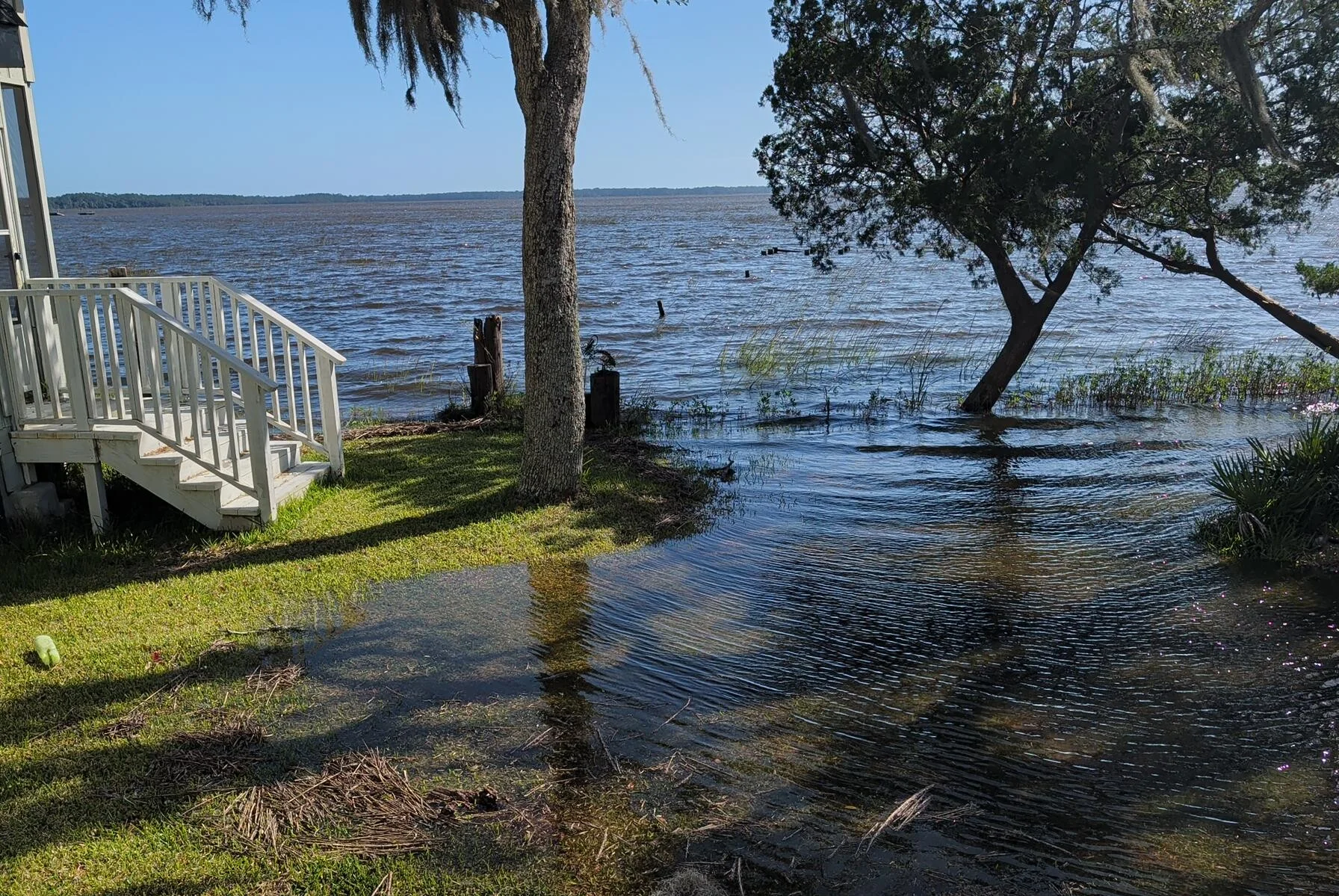
At Harriet's Bluff in Camden County, last week's high tides brought the water well beyond its familiar shoreline. It spread across the grass, surrounded the trees, and transformed an ordinary waterfront lawn into an extension of the tidal creek.
For those who live along Georgia's coast, the daily movement of water is part of life. Docks rise above exposed mud at low tide. Marsh grasses disappear beneath the water at high tide. Creeks that seem narrow and shallow in the morning can become broad waterways by afternoon.
But what makes coastal Georgia remarkable is just how dramatically that water rises and falls.
Eight Feet Between Two Worlds
Georgia experiences two high tides and two low tides each lunar day, a cycle lasting approximately 24 hours and 50 minutes. Roughly every six hours, the tide reverses direction.
Along much of our coast, the difference between high and low water averages six to eight feet. During especially strong tidal cycles, that difference can reach nine or ten feet.
Photograph: High tidal water spreads across a private waterfront property at Harriet's Bluff, Camden County, Georgia. © Georgia Tidal.